What Is Debt Collection?
Debt collection is the process by which creditors or third-party agencies pursue payments from individuals or businesses that have failed to meet their financial obligations. In its simplest form, it involves sending notices, making phone calls, and — when necessary — taking legal action to recover money owed. However, debt collection is a tightly regulated industry, particularly in the United States, governed primarily by the Fair Debt Collection Practices Act (FDCPA) of 1977, which prohibits abusive, deceptive, and unfair practices by debt collectors.
The industry has a dark side. Unscrupulous collectors have, over the decades, intimidated consumers with false threats of arrest, filed lawsuits over debts they could not prove existed, and used fraudulent court documents to obtain judgments against people who never had a fair chance to defend themselves. No case illustrates this more powerfully — or resulted in more sweeping consequences — than Sykes v. Mel S. Harris and Associates LLC.
The Case: Sykes v. Mel S. Harris and Associates LLC
Background
Sykes v. Mel S. Harris and Associates LLC, No. 09 Civ. 8486 (S.D.N.Y.), stands as the largest class-action debt collection settlement of its kind in U.S. history. The case was filed in New York’s Southern District Court and centered on a sophisticated, industrial-scale scheme involving a debt buyer, a law firm, and a process server working in coordinated fashion to exploit the legal system against vulnerable consumers.
The defendants — Mel S. Harris and Associates (a law firm), Leucadia National Corporation (a debt buyer), and Samserv (a process server) — had developed what critics described as a legal assembly line for extracting money from low-income New Yorkers. Their method was as effective as it was fraudulent.
How the Scheme Worked
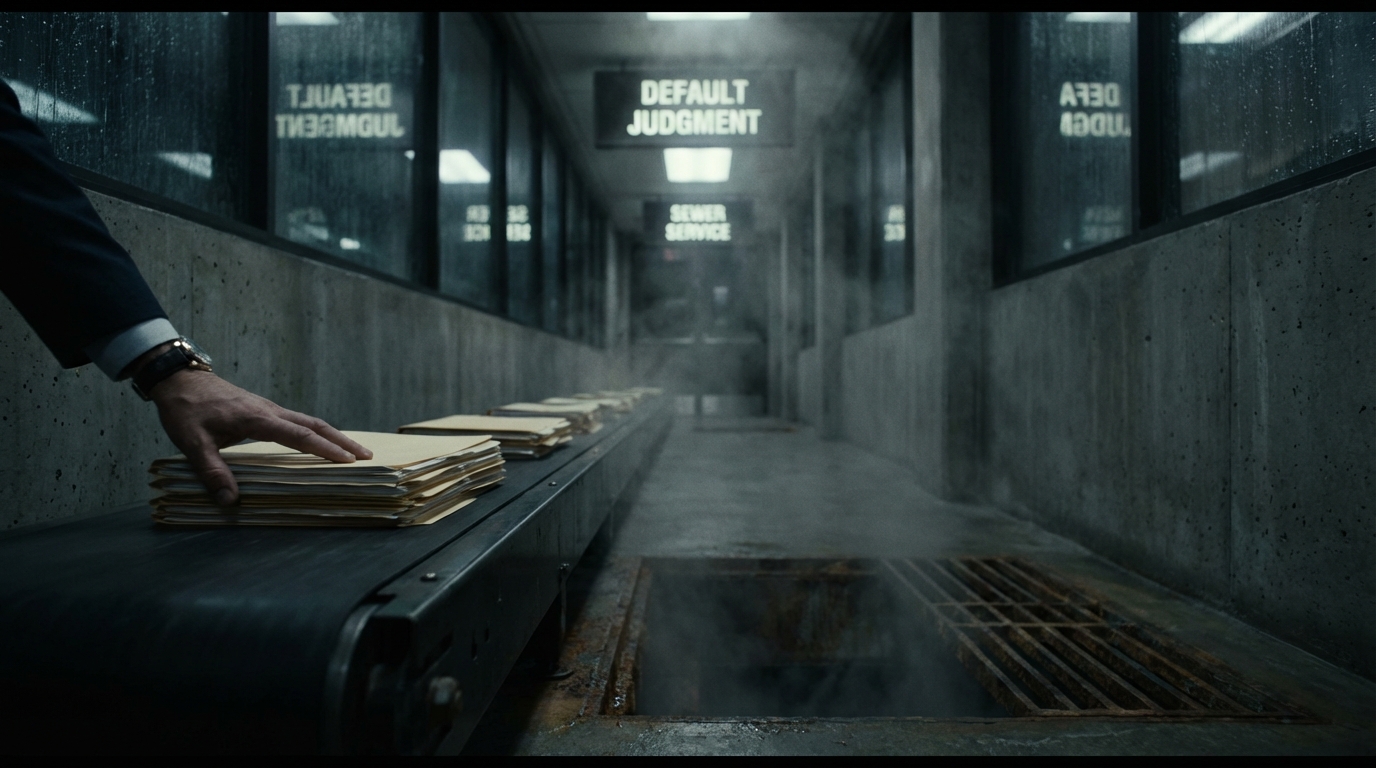
The defendants purchased large portfolios of old, often disputed consumer debts for pennies on the dollar. They then filed thousands of debt collection lawsuits in New York courts. The critical fraud occurred at the service stage: Samserv employees routinely engaged in “sewer service” — a practice where process servers are paid to claim they delivered legal notices to defendants, but in reality threw the papers away or never delivered them at all.
Because defendants never received notice, they never appeared in court. The law firm would then apply for a default judgment — a legal ruling in favor of the plaintiff simply because the defendant failed to show up. With a default judgment secured, the collectors could garnish wages, freeze bank accounts, and seize assets from people who often had no idea a lawsuit had even been filed against them.
The Scale of the Fraud
The numbers behind this case are staggering. Plaintiffs alleged that Mel Harris filed tens of thousands of such lawsuits, and that Samserv falsified process server affidavits at industrial scale. Many of the consumers targeted were low-income individuals living in New York City who lacked the resources or legal knowledge to challenge what was being done to them. By the time the class-action lawsuit was certified and litigated, the scheme had affected hundreds of thousands of New Yorkers over multiple years.
The $60 Million Settlement
In 2016, a federal judge approved a landmark $60 million settlement in the case. But the monetary figure was only the beginning. The settlement also resulted in:
- The vacating of approximately 195,000 default court judgments that had been fraudulently obtained
- The forgiveness of over $1 billion in alleged debt that consumers had been wrongfully pressured to pay
- Permanent restrictions on the defendants’ future debt collection practices
- A precedent-setting recognition that sewer service and robo-signed affidavits constitute systemic fraud on the court
Why It Matters
The Sykes case exposed a structural flaw in how debt collection lawsuits are processed. Because courts rely on attestations of service and affidavits of debt ownership, bad actors can exploit procedural defaults with minimal scrutiny. Debt collection lawsuit filings have surged more than 120% since 2019, with debt buyers like LVNV Funding dominating court dockets and most cases ending in default judgments. The Sykes case became a rallying point for consumer protection advocates demanding stricter court oversight.
Other Landmark Debt Collection Enforcement Actions
The Sykes case is not isolated. Other notable actions include:
National Landmark Logistics LLC (2020): The FTC alleged this company collected more than $12 million from consumers via robocalls and false claims of imminent legal action; the defendants were permanently banned from the industry
CFPB v. National Collegiate Student Loan Trusts (2017): The CFPB penalized the Trusts and Transworld $21.6 million for suing consumers over debts they could not prove were owed, and for using false affidavits — a form of “robo-signing” — to obtain default judgments
FTC v. Expert Global Solutions (2013): The world’s largest debt collection agency agreed to pay a $3.2 million civil penalty — at the time the largest ever obtained by the FTC — for harassing consumers with unlawful collection calls